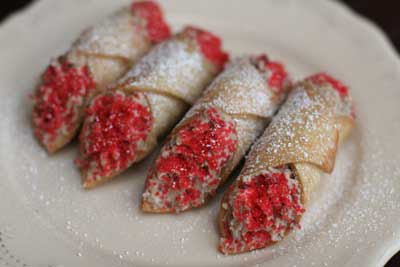
 From Ciao Italia Family Classics by Mary Ann Esposito....
The queen of all Sicilian desserts is definitely cannoli. Cannoli probably originally came from Arabs, who influenced so much of Sicily’s cooking. These crisp, flaky pastry dough cylinders are filled with sweetened sheep’s milk ricotta cheese, nuts, citron, and bits of chocolate. I cherish Nonna Saporito’s old recipe that originally called for sheep’s milk ricotta cheese for the filling but when she came to America, it was impossible to find, so whole cow’s milk ricotta was substituted instead. Whenever I make these, I use her old and very worn wooden forms, fashioned from a broom handle, but stainless steel forms are available in kitchenware stores.
Ingredients:
Filling
1 1/2 cups whole-milk ricotta cheese, well drained
3 tbsp granulated sugar
1 1/2 tspn ground cinnamon
1 1/2 cups coarsely chopped milk chocolate (4 to 5 small bars)
1/4 cup pistachio nuts, coarsely chopped
Dough
1 cup unbleached all-purpose flour
1 tbsp unsalted butter or lard
1 tbsp granulated sugar
4 to 5 tbsp dry Marsala wine
2 cups vegetable oil
colored sprinkles
confectioner's sugar for sprinkling
Preparation:
- To make the filling, whip the cheese in a bowl until smooth. Stir in the granulated sugar, cinnamon, and chocolate. Refrigerate, covered with plastic wrap, until ready to fill the cannoli shells.
- To make the dough, place the flour in a bowl or food processor. Add the butter or lard and sugar and mix with a fork, or pulse, until the mixture resembles coarse meal. Slowly add the 1/4 cup of wine and shape the mixture into a ball; add a little more wine if the dough appears too dry. It should be soft but not sticky. Knead the dough on a floured work surface until smooth, about 10 minutes. Wrap the dough in plastic wrap and refrigerate for 45 minutes.
- Place the chilled dough on a floured work surface. Divide the dough in half. Work with 1 piece of dough at a time; keep the remaining dough refrigerated. Using a rolling pin or pasta machine set to the finest setting, roll the dough out to a very thin long rectangle about 14 inches long and 3 inches wide. Cut the dough into 3-inch squares. Place a cannoli form diagonally across one square. Roll the dough up around the form so the points meet in the center. Seal the points with a little water. Continue making cylinders until all the dough is used.
- In an electric skillet(see note), heat the vegetable oil to 375 degrees Fahrenheit.
- Fry the cannoli three or four at a time, turning them as they brown and blister, until golden brown on all sides. Drain them on brown paper or paper towels. When they are cool enough to handle, carefully slide the cannoli off the forms.
- To serve, use a long iced tea spoon or pastry bag without a tip to fill the cannoli with the ricotta cheese mixture. Dip the ends into colored sprinkles, arrange them on a tray, and sprinkle confectioner's sugar over the tops. Serve at once.
Makes 14 to 18 cannoli
Recipe courtesy of Ciao Italia Family Classics by Mary Ann Esposito
 Italy [ print this recipe for Cannoli alla Nonna Saporito ]

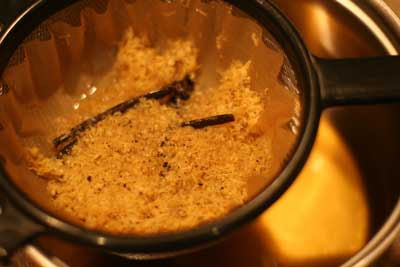
 Limoncello is an Italian citrus based liqueur that is usually served before or after meals. It originates from the Amalfi Coast region of Italy where lemons grow in abundance. Limoncello is usually served chilled and it is very popular in Italy during the warmer summer months. This traditional version of limoncello is lemon-based but similar liqueurs can be made from other citrus fruits. If you have the patience (this recipe takes about 35 days to make), limoncello is an easy liqueur to make at home. Staying true to this Italian classic, we used I Spirit Italian Vodka for this recipe.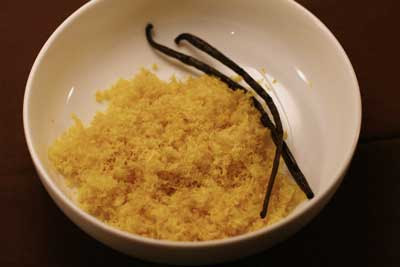

 From
From  Nonna Saporito could do no wrong in her kitchen. She could wield a cleaver like a pro, cut up a chicken lickety-split, and roll out pasta without breaking a sweat. Her signature dish, chicken in wine, is to this day my very favorite and one that I have never been able to duplicate in taste. Never! And when she served it, she also made arancine-fried rice balls. I devoured them. Arancine are traditional Sicilian street food that has its beginnings in many foreign cultures. The rice and saffron from the Arabs, the sheep's milk cheese from the Greeks, ragú from the French, and tomatoes from the Spanish. No wonder they are so good! Do not attempt to make these with regular rice. Make them with Arborio, the short-grain, starchy rice used to make risotto. It has the heft to stand up to frying.
 Traditional brioche is sweetened with a bit of sugar or honey and is used in savory recipes as well as desserts. For this book we decided to go to extremes: a dough that is sweet for our dessert pizzas and this version, with no sugar at all, for the savory pies. They are both rich and flavorful, but in two distinct ways.
 France [
  If you never seem to have time to cook during the week, try this recipe for Italian meatballs. You can make these on the weekend and heat them up in the microwave (for about 1 minute) when you need them during the week.
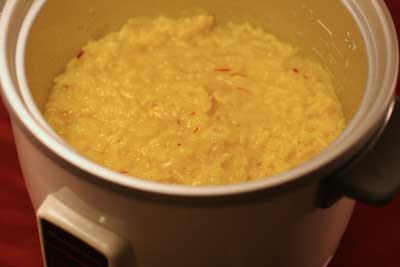 Legend has it that risotto Milanese dates back to 1574, when a stained-glass artisan, Zafferano, added the saffron he used for his paintings to his daughter's wedding risotto. It became (and still is) the talk of the town!
 Italy [
 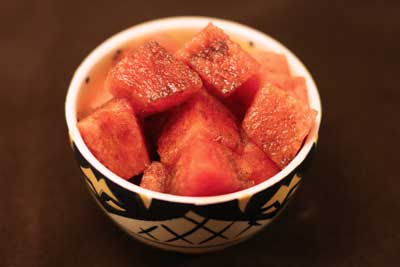 In the past, I've mostly used balsamic vinegar in marinades and salad dressing. However, I recently received a sample of
 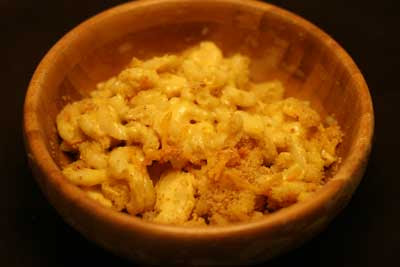 Mac and Cheese is classic comfort food with a long history. Tube shaped noodles were originally brought from China to Italy by Marco Polo. Italians added cheese to the mix and have been serving it this way for over 500 years. Macaroni and cheese gained popularity in England and was later introduced in North America in the late 1700s. In the 1930s,
  Italy
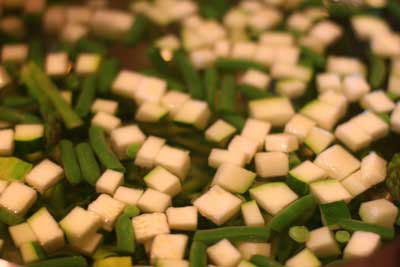
Italy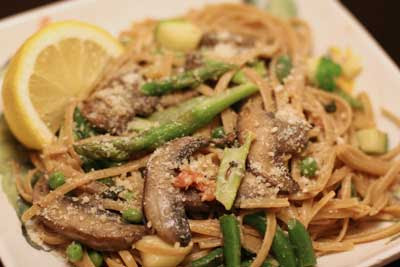 Pasta Primavera is the perfect pasta for summer as you can easily find most of the ingredients in season and at their freshest. It is similar to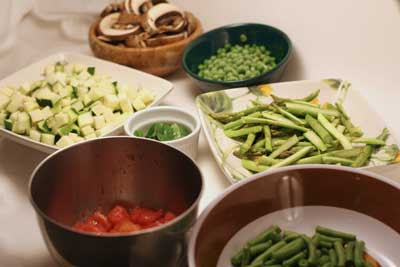


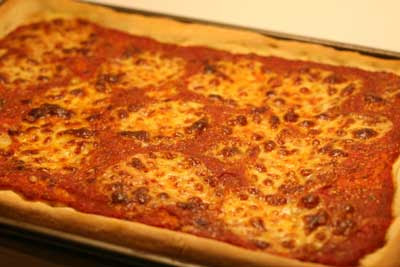 Italian Bakery Pizza is a traditional favorite at Italian bakeries. Italian bakery pizza crust is thick and flavorful and similar to lightly crisp bread. The dough takes longer to prepare than
  Italy
Italy
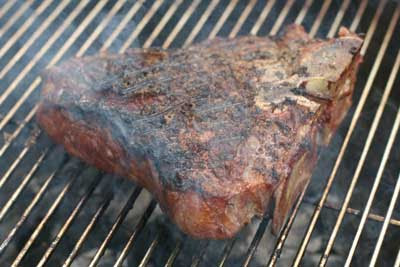
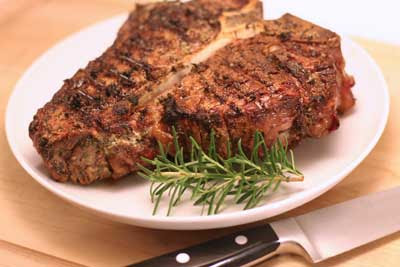 The Bistecca alla Fiorentina is a Tuscan killer of a steak. Weighing in at 3 pounds, it is large, tender and made for the barbecue. This style of steak originated in Tuscany and is made from the local Chianina cattle there.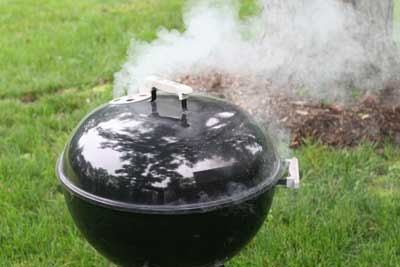

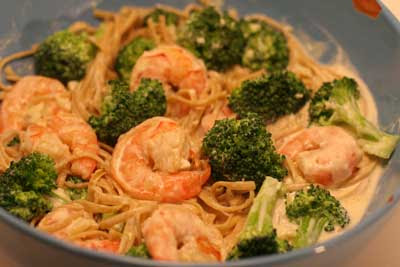 This recipe for Fettuccine Alfredo with Shrimp and Broccoli comes from the book,
  Italy
Italy
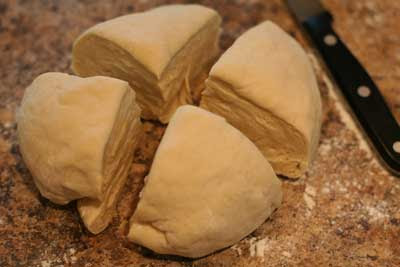
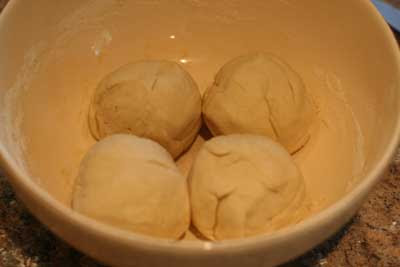
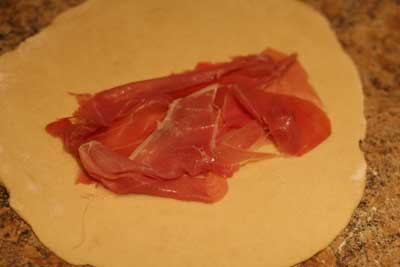
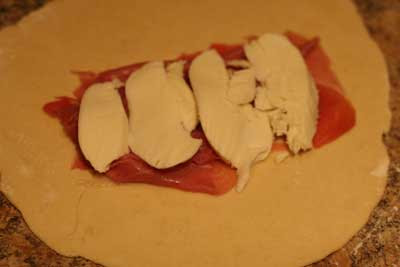
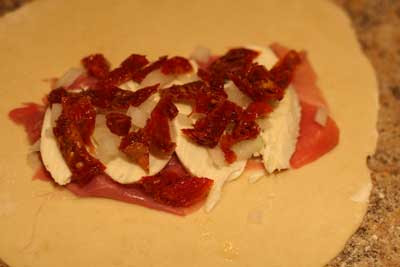
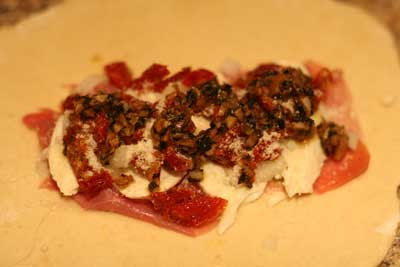
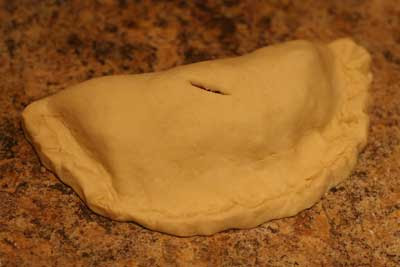
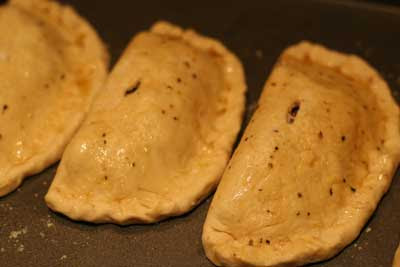
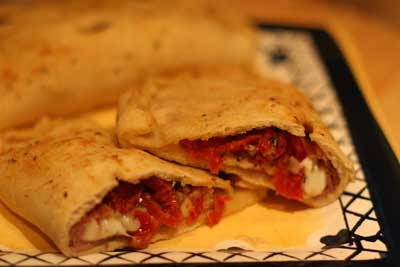 This calzone recipe features all that is great about Mediterranean cuisine. The shell is highlighted by a hint of lemon zest and a dusting of Parmesan cheese. The filling includes 2 thin slices of prosciutto topped with fresh mozzarella cheese, diced onions, garlic, basil, oregano, and sun dried tomatoes.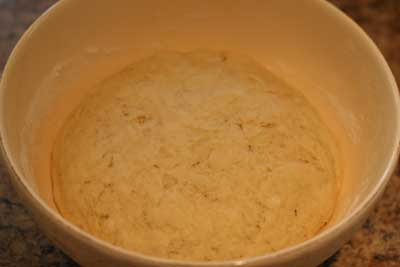

 Italy
Italy
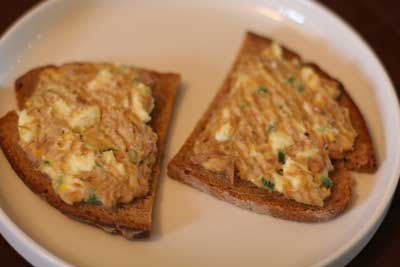 I had some left over hard boiled eggs and an assortment of condiments in the refrigerator last weekend, so I decided to use them to make tuna crostini, a classic Italian snack. I used 3 pieces of Dimpflmeier Klosterbrot Rye Bread basted with olive oil as the base. The end result was an easy to make snack that only took about 20 minutes to prepare. Here's how to do it:
 Italy
Italy